Project Overview

This digital history project explores the historical and contemporary connections between Ireland and Indigenous nations, with a particular focus on the 1847 Choctaw donation during the Great Irish Famine. While this moment serves as an entry point, the project expands outward to examine broader themes of colonialism, migration, and memory.

User Profile

This project is designed for a graduate-level student or general museum-style web visitor who is interested in colonial history, transnational solidarity, and digital storytelling. The user will also prefer visual aids and guided interpretation rather than dense academic text.

Research Questions

Methodology

Digital Mapping

ArcGIS was used to visualize geographic connections between Ireland and Indigenous nations. Mapping allowed for spatial analysis of immigration, displacement, and locations of commemoration.

Timeline Construction

A chronological timeline was developed to situate key events within broader historical contexts, connecting Indigenous removal, the Irish famine, and later acts of remembrance.

Database Creation

The project incorporates newspapers, historical accounts, and government documents to provide insight into contemporary understandings of these events and make it searchable by topic.

Design & Structure

The website was designed to guide users through a narrative experience. The homepage introduces the topic, while the findings section integrates timeline, map, and archival materials to support interpretation.

Sketches

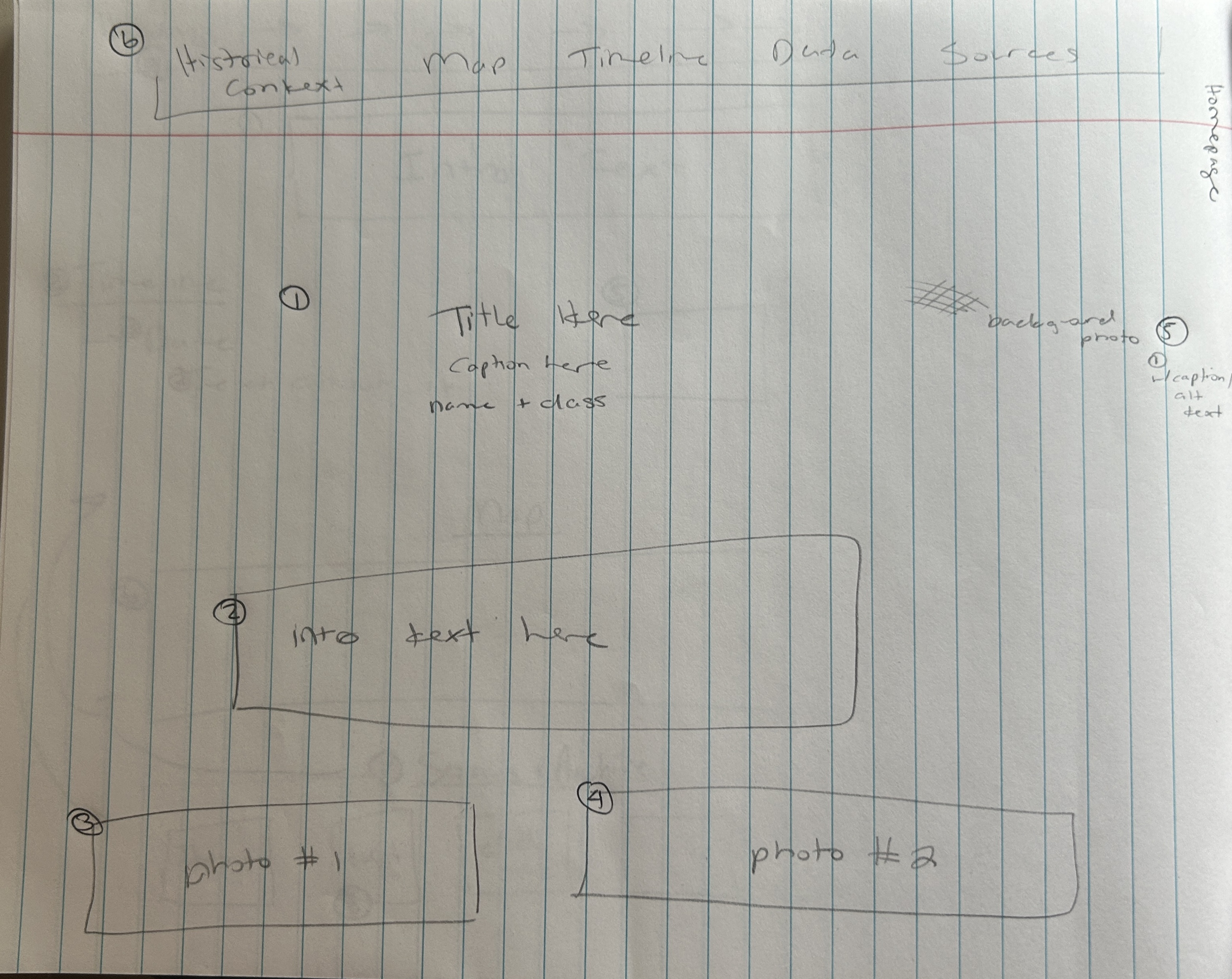
Early sketch of the homepage layout
On the home page, I chose to reveal a broad overview of Irish–Indigenous interactions and the central themes of solidarity, history, and memory. The design is meant to orient visitors quickly and guide them toward exploring the more detailed sections of the site, such as findings. This decision connects to my user profile by assuming a visitor who is unfamiliar with the topic and needs a clear, engaging entry point before diving into deeper analysis.
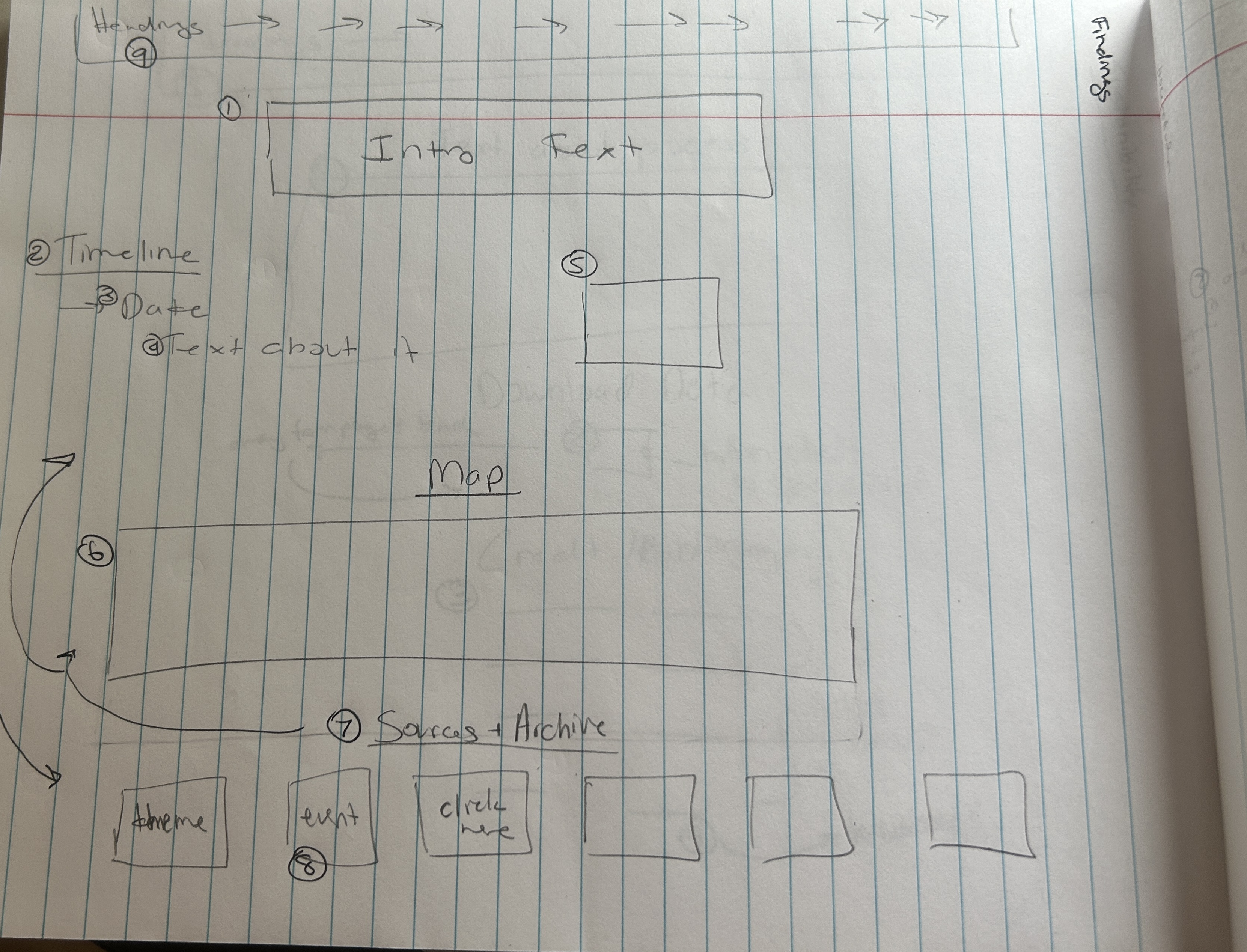
Sketch of the findings page layout
On the findings page, I reveal my research and patterns drawn from the sources on Irish–Indigenous interactions. When clicking on the timeline or map sources, it will take you to a where the digitzed document is being held (ex: British Library of Congress).The layout is designed to guide visitors toward engaging with the source and understanding connections across different historical moments. This aligns with my user profile by focusing on a visitor who wants to critically analyze history.
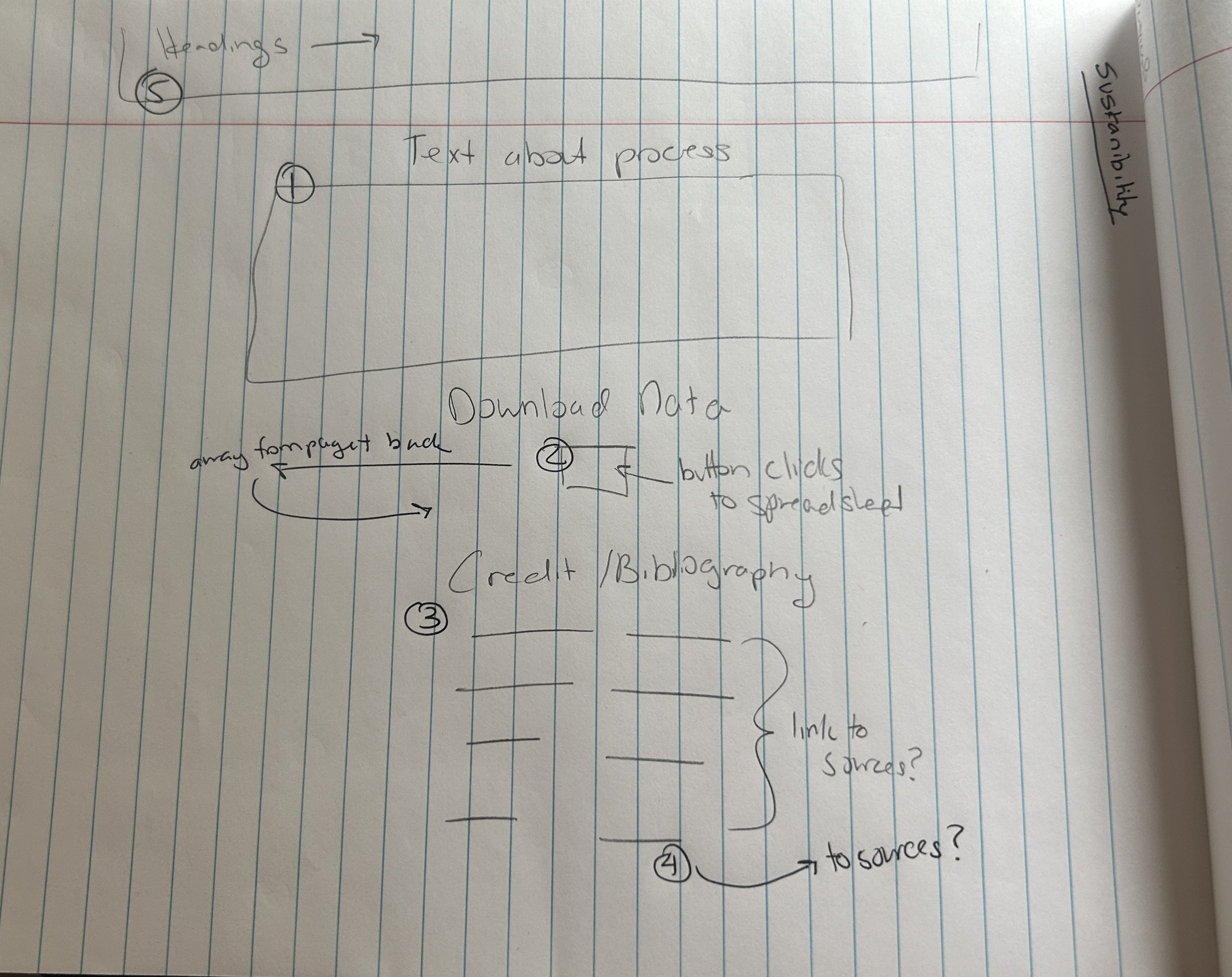
Sketch of the sustainability page design
On the sustainability page, I reveal the platform choices, design considerations, and long-term accessibility plans for the project. The design guides visitors toward understanding how digital history projects can remain usable, ethical, and maintainable over time. This connects to my user profile by focusing on a visitor interested in how digital tools preserve and communicate historical narratives responsibly.

Challenges & Limitations